2025 in Review and What We're Looking Forward to in 2026
Hi Everyone,
It is with great pleasure that I connect with you to share the significant strides we've made together in 2025 and our outlook for supply chain mapping in 2026.
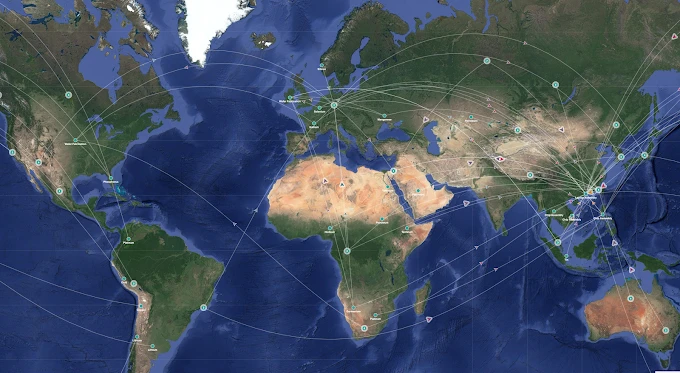
This year, we surpassed 8 million suppliers mapped with Sourcemap. We welcomed customers from 7 new countries. And most importantly, we saw supply chain mapping move from a "nice to have" to a business-critical function—embedded in procurement, compliance, risk, finance, and sustainability across industries and regions.
What made 2025 unique:
The cost of not mapping your supply chain became too high. New tariffs, the end of the de minimis loophole, the looming EU Deforestation, Battery and Forced Labor regulations all levy significant penalties for companies without n-tier due diligence. And none of these regulations can be satisfied by AI-generated or industry data. Only first-hand, validated, auditable supplier data—the kind Sourcemap collects—holds up under regulatory scrutiny.
Regulators started building on our approach. We were in the first wave of software integrated with the EU's TRACES platform and we are the only supply chain mapping company piloting US CBP's new ACE 2.0 system. These groundbreaking platforms require digital supply chain mapping data to be transmitted as part of customs clearance, something we started preparing our customers for in 2020.
n-Tier mapping is connected to the systems that run your business. With our integration partners, we launched end-to-end ERP integrations that trigger supply chain mapping directly from purchase orders and bills of materials for a totally automated customer experience.
What's coming in 2026:
Supply chain mapping requirements are growing stricter: The EU Deforestation Regulation begins enforcement in December 2026; the EU Battery Regulation in February 2027, and the EU Forced Labor Regulation in December 2027. Human rights due diligence requirements are converging across the EU and North America. And since February, only US importers that can prove material origins are eligible for double-digit tariff exemptions.
Here's what I find most interesting: The companies getting ahead aren't mapping just to meet compliance requirements. They're using deep supply chain visibility to secure critical material supplies, to rationalize their supplier networks, and to build resilience into their operations. Mapping went from a regulatory burden to a competitive advantage much faster than I expected.
At Sourcemap, we're proud of what we built with you in 2025, and we're ready to help you take advantage of what's coming next.
Happy holidays, and I look forward to continuing our work together in 2026.
Leo
Founder CEO
www.sourcemap.com