Supplier Risk and Watchlist Monitoring
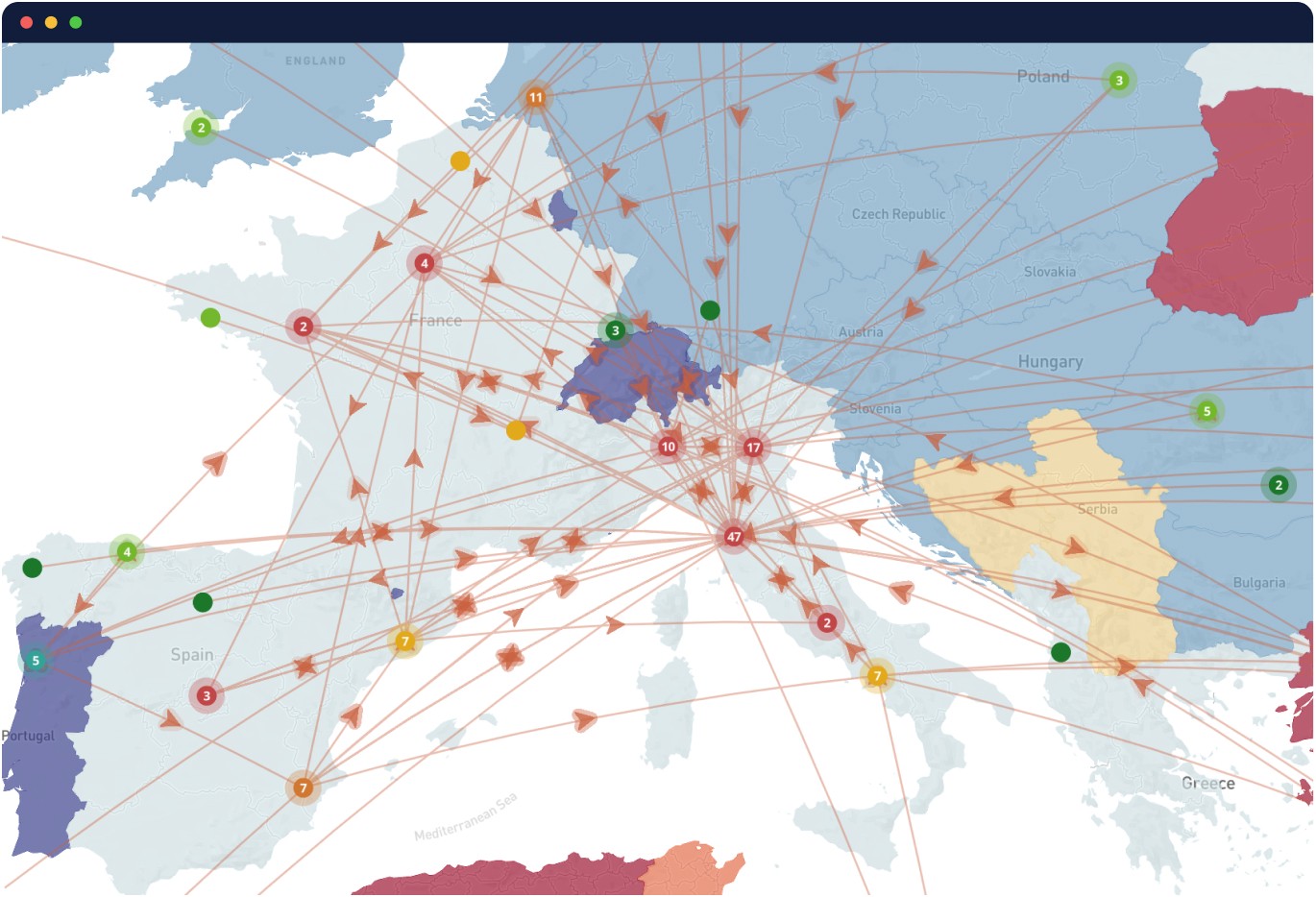
Continuous screening of every sub-tier supplier against global watchlists and risk intelligence matched with geographic and linguistic AI
Supplier Risk and Watchlist Monitoring
Continuous screening of every sub-tier supplier against global watchlists and risk intelligence matched with geographic and linguistic AI
Supplier Risk and Watchlist Monitoring
Continuous screening of every sub-tier supplier against global watchlists and risk intelligence matched with geographic and linguistic AI

01
Matching trained on global datasets
Restricted entities rarely appear under their listed names - Sourcemap's matching engine performs linguistic matching across character sets, geographic matching on facility locations, and corporate-relationship matching that follows ownership. Each candidate match is presented with its evidence for human decision, and every determination is recorded.
01
Matching trained on global datasets
Restricted entities rarely appear under their listed names - Sourcemap's matching engine performs linguistic matching across character sets, geographic matching on facility locations, and corporate-relationship matching that follows ownership. Each candidate match is presented with its evidence for human decision, and every determination is recorded.
01
Matching trained on global datasets
Restricted entities rarely appear under their listed names - Sourcemap's matching engine performs linguistic matching across character sets, geographic matching on facility locations, and corporate-relationship matching that follows ownership. Each candidate match is presented with its evidence for human decision, and every determination is recorded.

02
Alerts with business context
When Sourcemap discovers a new supplier at any tier, the watchlist scan is performed and alerts always arrive with context: which materials, parts, products, and customers are affected. Unlike AI-based supply chain mapping software, Sourcemap alerts return relevant and actionable information - almost no false positives.
02
Alerts with business context
When Sourcemap discovers a new supplier at any tier, the watchlist scan is performed and alerts always arrive with context: which materials, parts, products, and customers are affected. Unlike AI-based supply chain mapping software, Sourcemap alerts return relevant and actionable information - almost no false positives.
02
Alerts with business context
When Sourcemap discovers a new supplier at any tier, the watchlist scan is performed and alerts always arrive with context: which materials, parts, products, and customers are affected. Unlike AI-based supply chain mapping software, Sourcemap alerts return relevant and actionable information - almost no false positives.
03
Screening built for global due diligence regulations
Every screening result links to the original data sources and is substantiated by a Sourcemap-verified chain of custody, ensuring that companies have done their due diligence - Know Your Customer, Anti-Money Laundering, Ultimate Beneficial Ownership and more.
03
Screening built for global due diligence regulations
Every screening result links to the original data sources and is substantiated by a Sourcemap-verified chain of custody, ensuring that companies have done their due diligence - Know Your Customer, Anti-Money Laundering, Ultimate Beneficial Ownership and more.
03
Screening built for global due diligence regulations
Every screening result links to the original data sources and is substantiated by a Sourcemap-verified chain of custody, ensuring that companies have done their due diligence - Know Your Customer, Anti-Money Laundering, Ultimate Beneficial Ownership and more.


"We partner with Sourcemap, a leading provider of supply chain mapping and digital transparency solutions and a tool for improving the traceability of raw materials like cocoa, palm oil and hazelnuts."
Ferrero, Our Sourcing Approach
"A great tool to easily connect global brands and suppliers worldwide."
Data Analyst — Manufacturing firm, $500M–$1B, United States
"The platform provides strong visibility into supply chain data and helps centralize supplier information in a structured way."
IT Security Engineer — Telecommunications firm, $500M–$1B, Greece
"It has helped improve supply chain transparency and traceability across multiple tiers."
Engineer — Finance firm, $3B–$10B, Sri Lanka
"We partner with Sourcemap, a leading provider of supply chain mapping and digital transparency solutions and a tool for improving the traceability of raw materials like cocoa, palm oil and hazelnuts."
Ferrero, Our Sourcing Approach
"A great tool to easily connect global brands and suppliers worldwide."
Data Analyst — Manufacturing firm, $500M–$1B, United States
"The platform provides strong visibility into supply chain data and helps centralize supplier information in a structured way."
IT Security Engineer — Telecommunications firm, $500M–$1B, Greece
"It has helped improve supply chain transparency and traceability across multiple tiers."
Engineer — Finance firm, $3B–$10B, Sri Lanka
"We partner with Sourcemap, a leading provider of supply chain mapping and digital transparency solutions and a tool for improving the traceability of raw materials like cocoa, palm oil and hazelnuts."
Ferrero, Our Sourcing Approach
"A great tool to easily connect global brands and suppliers worldwide."
Data Analyst — Manufacturing firm, $500M–$1B, United States
"The platform provides strong visibility into supply chain data and helps centralize supplier information in a structured way."
IT Security Engineer — Telecommunications firm, $500M–$1B, Greece
"It has helped improve supply chain transparency and traceability across multiple tiers."
Engineer — Finance firm, $3B–$10B, Sri Lanka
"We partner with Sourcemap, a leading provider of supply chain mapping and digital transparency solutions and a tool for improving the traceability of raw materials like cocoa, palm oil and hazelnuts."
Ferrero, Our Sourcing Approach
"A great tool to easily connect global brands and suppliers worldwide."
Data Analyst — Manufacturing firm, $500M–$1B, United States
"The platform provides strong visibility into supply chain data and helps centralize supplier information in a structured way."
IT Security Engineer — Telecommunications firm, $500M–$1B, Greece
"It has helped improve supply chain transparency and traceability across multiple tiers."
Engineer — Finance firm, $3B–$10B, Sri Lanka
"We partner with Sourcemap, a leading provider of supply chain mapping and digital transparency solutions and a tool for improving the traceability of raw materials like cocoa, palm oil and hazelnuts."
Ferrero, Our Sourcing Approach
"A great tool to easily connect global brands and suppliers worldwide."
Data Analyst — Manufacturing firm, $500M–$1B, United States
"The platform provides strong visibility into supply chain data and helps centralize supplier information in a structured way."
IT Security Engineer — Telecommunications firm, $500M–$1B, Greece
"It has helped improve supply chain transparency and traceability across multiple tiers."
Engineer — Finance firm, $3B–$10B, Sri Lanka
"We partner with Sourcemap, a leading provider of supply chain mapping and digital transparency solutions and a tool for improving the traceability of raw materials like cocoa, palm oil and hazelnuts."
Ferrero, Our Sourcing Approach
"A great tool to easily connect global brands and suppliers worldwide."
Data Analyst — Manufacturing firm, $500M–$1B, United States
"The platform provides strong visibility into supply chain data and helps centralize supplier information in a structured way."
IT Security Engineer — Telecommunications firm, $500M–$1B, Greece
"It has helped improve supply chain transparency and traceability across multiple tiers."
Engineer — Finance firm, $3B–$10B, Sri Lanka
"We partner with Sourcemap, a leading provider of supply chain mapping and digital transparency solutions and a tool for improving the traceability of raw materials like cocoa, palm oil and hazelnuts."
Ferrero, Our Sourcing Approach
"A great tool to easily connect global brands and suppliers worldwide."
Data Analyst — Manufacturing firm, $500M–$1B, United States
"The platform provides strong visibility into supply chain data and helps centralize supplier information in a structured way."
IT Security Engineer — Telecommunications firm, $500M–$1B, Greece
"It has helped improve supply chain transparency and traceability across multiple tiers."
Engineer — Finance firm, $3B–$10B, Sri Lanka
"We partner with Sourcemap, a leading provider of supply chain mapping and digital transparency solutions and a tool for improving the traceability of raw materials like cocoa, palm oil and hazelnuts."
Ferrero, Our Sourcing Approach
"A great tool to easily connect global brands and suppliers worldwide."
Data Analyst — Manufacturing firm, $500M–$1B, United States
"The platform provides strong visibility into supply chain data and helps centralize supplier information in a structured way."
IT Security Engineer — Telecommunications firm, $500M–$1B, Greece
"It has helped improve supply chain transparency and traceability across multiple tiers."
Engineer — Finance firm, $3B–$10B, Sri Lanka
"We partner with Sourcemap, a leading provider of supply chain mapping and digital transparency solutions and a tool for improving the traceability of raw materials like cocoa, palm oil and hazelnuts."
Ferrero, Our Sourcing Approach
"A great tool to easily connect global brands and suppliers worldwide."
Data Analyst — Manufacturing firm, $500M–$1B, United States
"The platform provides strong visibility into supply chain data and helps centralize supplier information in a structured way."
IT Security Engineer — Telecommunications firm, $500M–$1B, Greece
"It has helped improve supply chain transparency and traceability across multiple tiers."
Engineer — Finance firm, $3B–$10B, Sri Lanka
"We partner with Sourcemap, a leading provider of supply chain mapping and digital transparency solutions and a tool for improving the traceability of raw materials like cocoa, palm oil and hazelnuts."
Ferrero, Our Sourcing Approach
"A great tool to easily connect global brands and suppliers worldwide."
Data Analyst — Manufacturing firm, $500M–$1B, United States
"The platform provides strong visibility into supply chain data and helps centralize supplier information in a structured way."
IT Security Engineer — Telecommunications firm, $500M–$1B, Greece
"It has helped improve supply chain transparency and traceability across multiple tiers."
Engineer — Finance firm, $3B–$10B, Sri Lanka
"We partner with Sourcemap, a leading provider of supply chain mapping and digital transparency solutions and a tool for improving the traceability of raw materials like cocoa, palm oil and hazelnuts."
Ferrero, Our Sourcing Approach
"A great tool to easily connect global brands and suppliers worldwide."
Data Analyst — Manufacturing firm, $500M–$1B, United States
"The platform provides strong visibility into supply chain data and helps centralize supplier information in a structured way."
IT Security Engineer — Telecommunications firm, $500M–$1B, Greece
"It has helped improve supply chain transparency and traceability across multiple tiers."
Engineer — Finance firm, $3B–$10B, Sri Lanka
"We partner with Sourcemap, a leading provider of supply chain mapping and digital transparency solutions and a tool for improving the traceability of raw materials like cocoa, palm oil and hazelnuts."
Ferrero, Our Sourcing Approach
"A great tool to easily connect global brands and suppliers worldwide."
Data Analyst — Manufacturing firm, $500M–$1B, United States
"The platform provides strong visibility into supply chain data and helps centralize supplier information in a structured way."
IT Security Engineer — Telecommunications firm, $500M–$1B, Greece
"It has helped improve supply chain transparency and traceability across multiple tiers."
Engineer — Finance firm, $3B–$10B, Sri Lanka

Frequently Asked Questions
What is supply chain mapping?
Supply chain mapping is the process of documenting every tier in a company's physical supply chain including all raw material extraction/production, all refining and manufacturing sites, and all logistics waypoints involved in bringing goods to market. EU and US regulations require supply chain mapping to be performed by collecting supplier-attested data and validating it using third-party data and/or assurance. Sourcemap introduced the first software for large-scale supply chain mapping based on supplier-attested data in 2011.
What is supply chain traceability?
Supply chain traceability is the process of documenting every transaction in a company's physical supply chain from raw materials to finished goods. US and Canadian authorities require supply chain traceability as part of importer guidance, and both EU and US authorities require supply chain traceability for content claims such as '100% recycled'. In order for companies to trace transactions at every tier of their supply chain they must collect evidence of transactions at every tier. Sourcemap introduced the first software for large-scale raw material-to-finished goods traceability to comply with US forced labor regulation in 2021.
What is supply chain transparency?
Supply chain transparency is the process of disclosing the physical flow of goods behind products in a way that can be readily understood by customers, consumers and/or regulators. Supply chain transparency is becoming commonplace in industries including apparel and food, and may be required by forthcoming regulations in North America and Europe. Supply chain transparency can only be achieved based on validated supplier-attested data since it necessitates the consent of all upstream suppliers. Sourcemap introduced the first platform for supply chain transparency on a global scale in 2008.
How are customs compliance and supply chain transparency related?
The US, Canada, Australia, New Zealand, and the EU all require some degree of supply chain mapping to comply with trade regulation. The US, Canada, Australia and New Zealand all require companies to import products free of forced labor, which is based on accounting for all of the suppliers in the supply chain from raw material to import. The EU requires companies to identify upstream suppliers at high risk of social or environmental non-compliance, and to map all the way to individual farms in order to prove deforestation-free sourcing.
Frequently Asked Questions
What is supply chain mapping?
Supply chain mapping is the process of documenting every tier in a company's physical supply chain including all raw material extraction/production, all refining and manufacturing sites, and all logistics waypoints involved in bringing goods to market. EU and US regulations require supply chain mapping to be performed by collecting supplier-attested data and validating it using third-party data and/or assurance. Sourcemap introduced the first software for large-scale supply chain mapping based on supplier-attested data in 2011.
What is supply chain traceability?
Supply chain traceability is the process of documenting every transaction in a company's physical supply chain from raw materials to finished goods. US and Canadian authorities require supply chain traceability as part of importer guidance, and both EU and US authorities require supply chain traceability for content claims such as '100% recycled'. In order for companies to trace transactions at every tier of their supply chain they must collect evidence of transactions at every tier. Sourcemap introduced the first software for large-scale raw material-to-finished goods traceability to comply with US forced labor regulation in 2021.
What is supply chain transparency?
Supply chain transparency is the process of disclosing the physical flow of goods behind products in a way that can be readily understood by customers, consumers and/or regulators. Supply chain transparency is becoming commonplace in industries including apparel and food, and may be required by forthcoming regulations in North America and Europe. Supply chain transparency can only be achieved based on validated supplier-attested data since it necessitates the consent of all upstream suppliers. Sourcemap introduced the first platform for supply chain transparency on a global scale in 2008.
How are customs compliance and supply chain transparency related?
The US, Canada, Australia, New Zealand, and the EU all require some degree of supply chain mapping to comply with trade regulation. The US, Canada, Australia and New Zealand all require companies to import products free of forced labor, which is based on accounting for all of the suppliers in the supply chain from raw material to import. The EU requires companies to identify upstream suppliers at high risk of social or environmental non-compliance, and to map all the way to individual farms in order to prove deforestation-free sourcing.
Frequently Asked Questions
What is supply chain mapping?
Supply chain mapping is the process of documenting every tier in a company's physical supply chain including all raw material extraction/production, all refining and manufacturing sites, and all logistics waypoints involved in bringing goods to market. EU and US regulations require supply chain mapping to be performed by collecting supplier-attested data and validating it using third-party data and/or assurance. Sourcemap introduced the first software for large-scale supply chain mapping based on supplier-attested data in 2011.
What is supply chain traceability?
Supply chain traceability is the process of documenting every transaction in a company's physical supply chain from raw materials to finished goods. US and Canadian authorities require supply chain traceability as part of importer guidance, and both EU and US authorities require supply chain traceability for content claims such as '100% recycled'. In order for companies to trace transactions at every tier of their supply chain they must collect evidence of transactions at every tier. Sourcemap introduced the first software for large-scale raw material-to-finished goods traceability to comply with US forced labor regulation in 2021.
What is supply chain transparency?
Supply chain transparency is the process of disclosing the physical flow of goods behind products in a way that can be readily understood by customers, consumers and/or regulators. Supply chain transparency is becoming commonplace in industries including apparel and food, and may be required by forthcoming regulations in North America and Europe. Supply chain transparency can only be achieved based on validated supplier-attested data since it necessitates the consent of all upstream suppliers. Sourcemap introduced the first platform for supply chain transparency on a global scale in 2008.
How are customs compliance and supply chain transparency related?
The US, Canada, Australia, New Zealand, and the EU all require some degree of supply chain mapping to comply with trade regulation. The US, Canada, Australia and New Zealand all require companies to import products free of forced labor, which is based on accounting for all of the suppliers in the supply chain from raw material to import. The EU requires companies to identify upstream suppliers at high risk of social or environmental non-compliance, and to map all the way to individual farms in order to prove deforestation-free sourcing.
Let Us Show You How to Map Your Supply Chain to Tier n Accurately and Completely
Let Us Show You How to Map Your Supply Chain to Tier n Accurately and Completely