Bill of Materials n-Tier Mapping
Map and validate every upstream process and part against your product information management systems
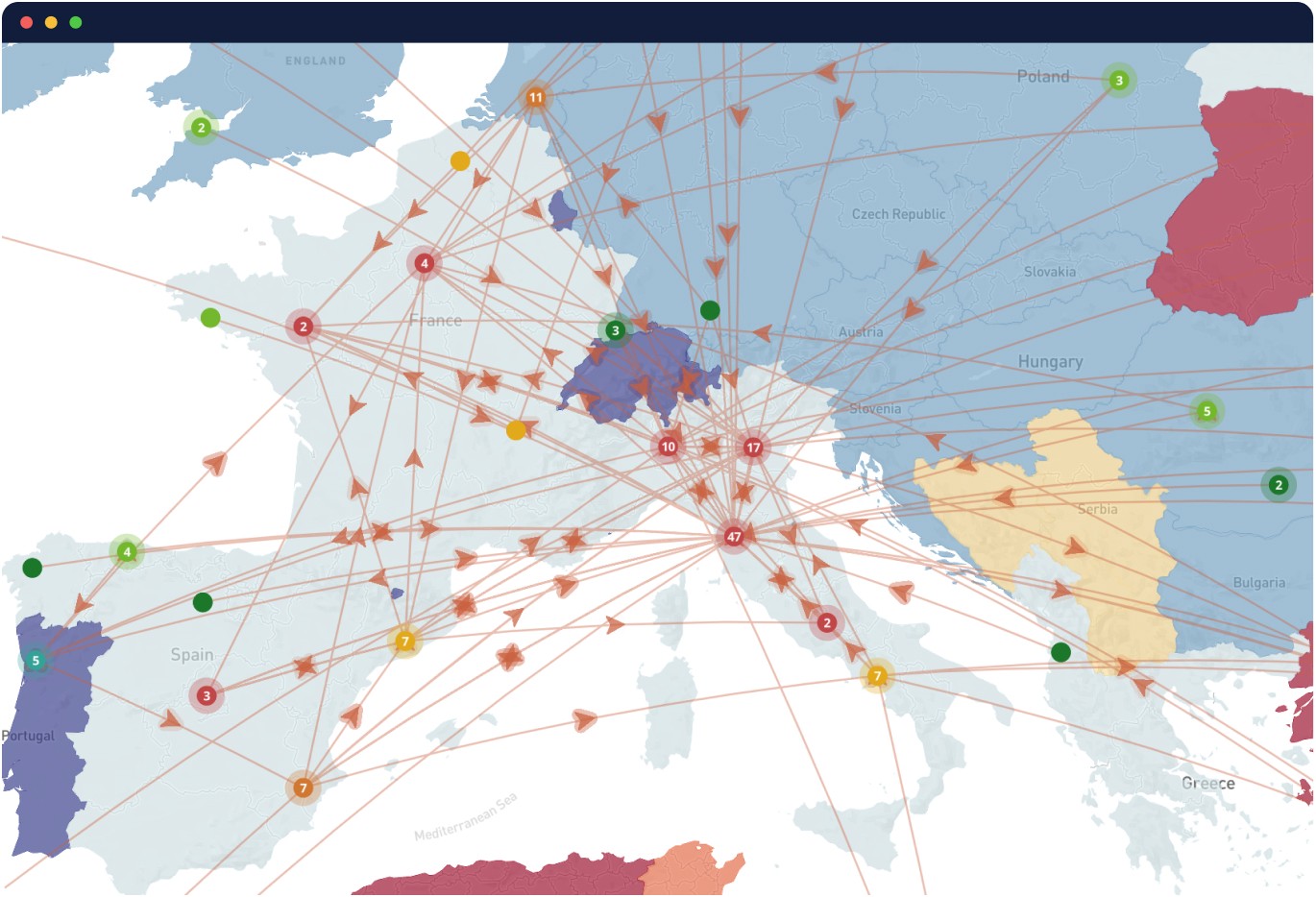
Bill of Materials n-Tier Mapping
Map and validate every upstream process and part against your product information management systems
Bill of Materials n-Tier Mapping
Map and validate every upstream process and part against your product information management systems

01
Start from the BoM's you already have
Structured product hierarchies flow into Sourcemap through a dedicated API: article identifiers, HTS codes, parent and child part relationships, and tier-1 supplier attributions. Traceability requests are generated automatically at the part level, with no manual configuration per product line. When the catalog changes, the map follows.
01
Start from the BoM's you already have
Structured product hierarchies flow into Sourcemap through a dedicated API: article identifiers, HTS codes, parent and child part relationships, and tier-1 supplier attributions. Traceability requests are generated automatically at the part level, with no manual configuration per product line. When the catalog changes, the map follows.
01
Start from the BoM's you already have
Structured product hierarchies flow into Sourcemap through a dedicated API: article identifiers, HTS codes, parent and child part relationships, and tier-1 supplier attributions. Traceability requests are generated automatically at the part level, with no manual configuration per product line. When the catalog changes, the map follows.

02
One request covers every applicable regulation
A rules engine reads each part's HS code, declared materials, and facility geography, then asks each supplier for what the applicable frameworks require: country of melt and pour, smelt and cast, plot geolocation for deforestation rules, chain-of-custody documents that forced labor enforcement in the US and the EU demands. Suppliers see one request and answer once; the platform routes each answer to every regulation it serves. New rules extend the engine without restarting collection.
02
One request covers every applicable regulation
A rules engine reads each part's HS code, declared materials, and facility geography, then asks each supplier for what the applicable frameworks require: country of melt and pour, smelt and cast, plot geolocation for deforestation rules, chain-of-custody documents that forced labor enforcement in the US and the EU demands. Suppliers see one request and answer once; the platform routes each answer to every regulation it serves. New rules extend the engine without restarting collection.
02
One request covers every applicable regulation
A rules engine reads each part's HS code, declared materials, and facility geography, then asks each supplier for what the applicable frameworks require: country of melt and pour, smelt and cast, plot geolocation for deforestation rules, chain-of-custody documents that forced labor enforcement in the US and the EU demands. Suppliers see one request and answer once; the platform routes each answer to every regulation it serves. New rules extend the engine without restarting collection.
03
Evidence attached where duty is assessed
Each part carries its documents: Mill test certificates with production site details, Signed declarations for articles claiming no metal content, Weight documentation for articles seeking de minimis metal exemptions, Per-shipment custody records tracing high-risk materials to their raw material origin.
03
Evidence attached where duty is assessed
Each part carries its documents: Mill test certificates with production site details, Signed declarations for articles claiming no metal content, Weight documentation for articles seeking de minimis metal exemptions, Per-shipment custody records tracing high-risk materials to their raw material origin.
03
Evidence attached where duty is assessed
Each part carries its documents: Mill test certificates with production site details, Signed declarations for articles claiming no metal content, Weight documentation for articles seeking de minimis metal exemptions, Per-shipment custody records tracing high-risk materials to their raw material origin.

04
Roll-up from part to article
Part-level responses aggregate to the parent article: total material content by weight, origin-weighted duty exposure, and exportable reports formatted for customs submission or internal audit. Gaps surface before they cost money; a component with unknown origin is flagged for follow-up before customs applies the worst-case rate on the entire article value.
04
Roll-up from part to article
Part-level responses aggregate to the parent article: total material content by weight, origin-weighted duty exposure, and exportable reports formatted for customs submission or internal audit. Gaps surface before they cost money; a component with unknown origin is flagged for follow-up before customs applies the worst-case rate on the entire article value.
04
Roll-up from part to article
Part-level responses aggregate to the parent article: total material content by weight, origin-weighted duty exposure, and exportable reports formatted for customs submission or internal audit. Gaps surface before they cost money; a component with unknown origin is flagged for follow-up before customs applies the worst-case rate on the entire article value.

05
Ready for the 20-day letter
When customs questions an entry's metal content, the request for information typically demands the calculation method, a breakdown by weight and value, the identity of whoever prepared it, supporting documents, invoices and packing lists, schematics, and photographs, all within 20 days.
05
Ready for the 20-day letter
When customs questions an entry's metal content, the request for information typically demands the calculation method, a breakdown by weight and value, the identity of whoever prepared it, supporting documents, invoices and packing lists, schematics, and photographs, all within 20 days.
05
Ready for the 20-day letter
When customs questions an entry's metal content, the request for information typically demands the calculation method, a breakdown by weight and value, the identity of whoever prepared it, supporting documents, invoices and packing lists, schematics, and photographs, all within 20 days.


"We partner with Sourcemap, a leading provider of supply chain mapping and digital transparency solutions and a tool for improving the traceability of raw materials like cocoa, palm oil and hazelnuts."
Ferrero, Our Sourcing Approach
"A great tool to easily connect global brands and suppliers worldwide."
Data Analyst — Manufacturing firm, $500M–$1B, United States
"The platform provides strong visibility into supply chain data and helps centralize supplier information in a structured way."
IT Security Engineer — Telecommunications firm, $500M–$1B, Greece
"It has helped improve supply chain transparency and traceability across multiple tiers."
Engineer — Finance firm, $3B–$10B, Sri Lanka
"We partner with Sourcemap, a leading provider of supply chain mapping and digital transparency solutions and a tool for improving the traceability of raw materials like cocoa, palm oil and hazelnuts."
Ferrero, Our Sourcing Approach
"A great tool to easily connect global brands and suppliers worldwide."
Data Analyst — Manufacturing firm, $500M–$1B, United States
"The platform provides strong visibility into supply chain data and helps centralize supplier information in a structured way."
IT Security Engineer — Telecommunications firm, $500M–$1B, Greece
"It has helped improve supply chain transparency and traceability across multiple tiers."
Engineer — Finance firm, $3B–$10B, Sri Lanka
"We partner with Sourcemap, a leading provider of supply chain mapping and digital transparency solutions and a tool for improving the traceability of raw materials like cocoa, palm oil and hazelnuts."
Ferrero, Our Sourcing Approach
"A great tool to easily connect global brands and suppliers worldwide."
Data Analyst — Manufacturing firm, $500M–$1B, United States
"The platform provides strong visibility into supply chain data and helps centralize supplier information in a structured way."
IT Security Engineer — Telecommunications firm, $500M–$1B, Greece
"It has helped improve supply chain transparency and traceability across multiple tiers."
Engineer — Finance firm, $3B–$10B, Sri Lanka
"We partner with Sourcemap, a leading provider of supply chain mapping and digital transparency solutions and a tool for improving the traceability of raw materials like cocoa, palm oil and hazelnuts."
Ferrero, Our Sourcing Approach
"A great tool to easily connect global brands and suppliers worldwide."
Data Analyst — Manufacturing firm, $500M–$1B, United States
"The platform provides strong visibility into supply chain data and helps centralize supplier information in a structured way."
IT Security Engineer — Telecommunications firm, $500M–$1B, Greece
"It has helped improve supply chain transparency and traceability across multiple tiers."
Engineer — Finance firm, $3B–$10B, Sri Lanka
"We partner with Sourcemap, a leading provider of supply chain mapping and digital transparency solutions and a tool for improving the traceability of raw materials like cocoa, palm oil and hazelnuts."
Ferrero, Our Sourcing Approach
"A great tool to easily connect global brands and suppliers worldwide."
Data Analyst — Manufacturing firm, $500M–$1B, United States
"The platform provides strong visibility into supply chain data and helps centralize supplier information in a structured way."
IT Security Engineer — Telecommunications firm, $500M–$1B, Greece
"It has helped improve supply chain transparency and traceability across multiple tiers."
Engineer — Finance firm, $3B–$10B, Sri Lanka
"We partner with Sourcemap, a leading provider of supply chain mapping and digital transparency solutions and a tool for improving the traceability of raw materials like cocoa, palm oil and hazelnuts."
Ferrero, Our Sourcing Approach
"A great tool to easily connect global brands and suppliers worldwide."
Data Analyst — Manufacturing firm, $500M–$1B, United States
"The platform provides strong visibility into supply chain data and helps centralize supplier information in a structured way."
IT Security Engineer — Telecommunications firm, $500M–$1B, Greece
"It has helped improve supply chain transparency and traceability across multiple tiers."
Engineer — Finance firm, $3B–$10B, Sri Lanka
"We partner with Sourcemap, a leading provider of supply chain mapping and digital transparency solutions and a tool for improving the traceability of raw materials like cocoa, palm oil and hazelnuts."
Ferrero, Our Sourcing Approach
"A great tool to easily connect global brands and suppliers worldwide."
Data Analyst — Manufacturing firm, $500M–$1B, United States
"The platform provides strong visibility into supply chain data and helps centralize supplier information in a structured way."
IT Security Engineer — Telecommunications firm, $500M–$1B, Greece
"It has helped improve supply chain transparency and traceability across multiple tiers."
Engineer — Finance firm, $3B–$10B, Sri Lanka
"We partner with Sourcemap, a leading provider of supply chain mapping and digital transparency solutions and a tool for improving the traceability of raw materials like cocoa, palm oil and hazelnuts."
Ferrero, Our Sourcing Approach
"A great tool to easily connect global brands and suppliers worldwide."
Data Analyst — Manufacturing firm, $500M–$1B, United States
"The platform provides strong visibility into supply chain data and helps centralize supplier information in a structured way."
IT Security Engineer — Telecommunications firm, $500M–$1B, Greece
"It has helped improve supply chain transparency and traceability across multiple tiers."
Engineer — Finance firm, $3B–$10B, Sri Lanka
"We partner with Sourcemap, a leading provider of supply chain mapping and digital transparency solutions and a tool for improving the traceability of raw materials like cocoa, palm oil and hazelnuts."
Ferrero, Our Sourcing Approach
"A great tool to easily connect global brands and suppliers worldwide."
Data Analyst — Manufacturing firm, $500M–$1B, United States
"The platform provides strong visibility into supply chain data and helps centralize supplier information in a structured way."
IT Security Engineer — Telecommunications firm, $500M–$1B, Greece
"It has helped improve supply chain transparency and traceability across multiple tiers."
Engineer — Finance firm, $3B–$10B, Sri Lanka
"We partner with Sourcemap, a leading provider of supply chain mapping and digital transparency solutions and a tool for improving the traceability of raw materials like cocoa, palm oil and hazelnuts."
Ferrero, Our Sourcing Approach
"A great tool to easily connect global brands and suppliers worldwide."
Data Analyst — Manufacturing firm, $500M–$1B, United States
"The platform provides strong visibility into supply chain data and helps centralize supplier information in a structured way."
IT Security Engineer — Telecommunications firm, $500M–$1B, Greece
"It has helped improve supply chain transparency and traceability across multiple tiers."
Engineer — Finance firm, $3B–$10B, Sri Lanka
"We partner with Sourcemap, a leading provider of supply chain mapping and digital transparency solutions and a tool for improving the traceability of raw materials like cocoa, palm oil and hazelnuts."
Ferrero, Our Sourcing Approach
"A great tool to easily connect global brands and suppliers worldwide."
Data Analyst — Manufacturing firm, $500M–$1B, United States
"The platform provides strong visibility into supply chain data and helps centralize supplier information in a structured way."
IT Security Engineer — Telecommunications firm, $500M–$1B, Greece
"It has helped improve supply chain transparency and traceability across multiple tiers."
Engineer — Finance firm, $3B–$10B, Sri Lanka
"We partner with Sourcemap, a leading provider of supply chain mapping and digital transparency solutions and a tool for improving the traceability of raw materials like cocoa, palm oil and hazelnuts."
Ferrero, Our Sourcing Approach
"A great tool to easily connect global brands and suppliers worldwide."
Data Analyst — Manufacturing firm, $500M–$1B, United States
"The platform provides strong visibility into supply chain data and helps centralize supplier information in a structured way."
IT Security Engineer — Telecommunications firm, $500M–$1B, Greece
"It has helped improve supply chain transparency and traceability across multiple tiers."
Engineer — Finance firm, $3B–$10B, Sri Lanka

Frequently Asked Questions
What is supply chain mapping?
Supply chain mapping is the process of documenting every tier in a company's physical supply chain including all raw material extraction/production, all refining and manufacturing sites, and all logistics waypoints involved in bringing goods to market. EU and US regulations require supply chain mapping to be performed by collecting supplier-attested data and validating it using third-party data and/or assurance. Sourcemap introduced the first software for large-scale supply chain mapping based on supplier-attested data in 2011.
What is supply chain traceability?
Supply chain traceability is the process of documenting every transaction in a company's physical supply chain from raw materials to finished goods. US and Canadian authorities require supply chain traceability as part of importer guidance, and both EU and US authorities require supply chain traceability for content claims such as '100% recycled'. In order for companies to trace transactions at every tier of their supply chain they must collect evidence of transactions at every tier. Sourcemap introduced the first software for large-scale raw material-to-finished goods traceability to comply with US forced labor regulation in 2021.
What is supply chain transparency?
Supply chain transparency is the process of disclosing the physical flow of goods behind products in a way that can be readily understood by customers, consumers and/or regulators. Supply chain transparency is becoming commonplace in industries including apparel and food, and may be required by forthcoming regulations in North America and Europe. Supply chain transparency can only be achieved based on validated supplier-attested data since it necessitates the consent of all upstream suppliers. Sourcemap introduced the first platform for supply chain transparency on a global scale in 2008.
How are customs compliance and supply chain transparency related?
The US, Canada, Australia, New Zealand, and the EU all require some degree of supply chain mapping to comply with trade regulation. The US, Canada, Australia and New Zealand all require companies to import products free of forced labor, which is based on accounting for all of the suppliers in the supply chain from raw material to import. The EU requires companies to identify upstream suppliers at high risk of social or environmental non-compliance, and to map all the way to individual farms in order to prove deforestation-free sourcing.
Frequently Asked Questions
What is supply chain mapping?
Supply chain mapping is the process of documenting every tier in a company's physical supply chain including all raw material extraction/production, all refining and manufacturing sites, and all logistics waypoints involved in bringing goods to market. EU and US regulations require supply chain mapping to be performed by collecting supplier-attested data and validating it using third-party data and/or assurance. Sourcemap introduced the first software for large-scale supply chain mapping based on supplier-attested data in 2011.
What is supply chain traceability?
Supply chain traceability is the process of documenting every transaction in a company's physical supply chain from raw materials to finished goods. US and Canadian authorities require supply chain traceability as part of importer guidance, and both EU and US authorities require supply chain traceability for content claims such as '100% recycled'. In order for companies to trace transactions at every tier of their supply chain they must collect evidence of transactions at every tier. Sourcemap introduced the first software for large-scale raw material-to-finished goods traceability to comply with US forced labor regulation in 2021.
What is supply chain transparency?
Supply chain transparency is the process of disclosing the physical flow of goods behind products in a way that can be readily understood by customers, consumers and/or regulators. Supply chain transparency is becoming commonplace in industries including apparel and food, and may be required by forthcoming regulations in North America and Europe. Supply chain transparency can only be achieved based on validated supplier-attested data since it necessitates the consent of all upstream suppliers. Sourcemap introduced the first platform for supply chain transparency on a global scale in 2008.
How are customs compliance and supply chain transparency related?
The US, Canada, Australia, New Zealand, and the EU all require some degree of supply chain mapping to comply with trade regulation. The US, Canada, Australia and New Zealand all require companies to import products free of forced labor, which is based on accounting for all of the suppliers in the supply chain from raw material to import. The EU requires companies to identify upstream suppliers at high risk of social or environmental non-compliance, and to map all the way to individual farms in order to prove deforestation-free sourcing.
Frequently Asked Questions
What is supply chain mapping?
Supply chain mapping is the process of documenting every tier in a company's physical supply chain including all raw material extraction/production, all refining and manufacturing sites, and all logistics waypoints involved in bringing goods to market. EU and US regulations require supply chain mapping to be performed by collecting supplier-attested data and validating it using third-party data and/or assurance. Sourcemap introduced the first software for large-scale supply chain mapping based on supplier-attested data in 2011.
What is supply chain traceability?
Supply chain traceability is the process of documenting every transaction in a company's physical supply chain from raw materials to finished goods. US and Canadian authorities require supply chain traceability as part of importer guidance, and both EU and US authorities require supply chain traceability for content claims such as '100% recycled'. In order for companies to trace transactions at every tier of their supply chain they must collect evidence of transactions at every tier. Sourcemap introduced the first software for large-scale raw material-to-finished goods traceability to comply with US forced labor regulation in 2021.
What is supply chain transparency?
Supply chain transparency is the process of disclosing the physical flow of goods behind products in a way that can be readily understood by customers, consumers and/or regulators. Supply chain transparency is becoming commonplace in industries including apparel and food, and may be required by forthcoming regulations in North America and Europe. Supply chain transparency can only be achieved based on validated supplier-attested data since it necessitates the consent of all upstream suppliers. Sourcemap introduced the first platform for supply chain transparency on a global scale in 2008.
How are customs compliance and supply chain transparency related?
The US, Canada, Australia, New Zealand, and the EU all require some degree of supply chain mapping to comply with trade regulation. The US, Canada, Australia and New Zealand all require companies to import products free of forced labor, which is based on accounting for all of the suppliers in the supply chain from raw material to import. The EU requires companies to identify upstream suppliers at high risk of social or environmental non-compliance, and to map all the way to individual farms in order to prove deforestation-free sourcing.
Let Us Show You How to Map Your Supply Chain to Tier n Accurately and Completely
Let Us Show You How to Map Your Supply Chain to Tier n Accurately and Completely