The Most Important Supply Chain Regulatory News for This Week, April 13th 2026
Here is Sourcemap’s weekly roundup of the most important supply chain regulatory news for this week, April 13, 2026:
China’s New Industrial and Supply Chain Security Framework: EU/US laws require deep-tier supply chain audits, but China now treats some of these audits as potential national security threats.
On April 7, 2026, China's State Council enacted the first comprehensive regulations on supply chain security. Companies conducting on-the-ground audits in China for ESG or forced labor compliance may now face investigations if their actions are seen as interrupting normal transactions or following discriminatory foreign mandates.
Source: Morgan Lewis - China Enacts First Comprehensive Regulations on Supply Chain Security
CBP Updates UFLPA Dashboard with Item-Level Detail
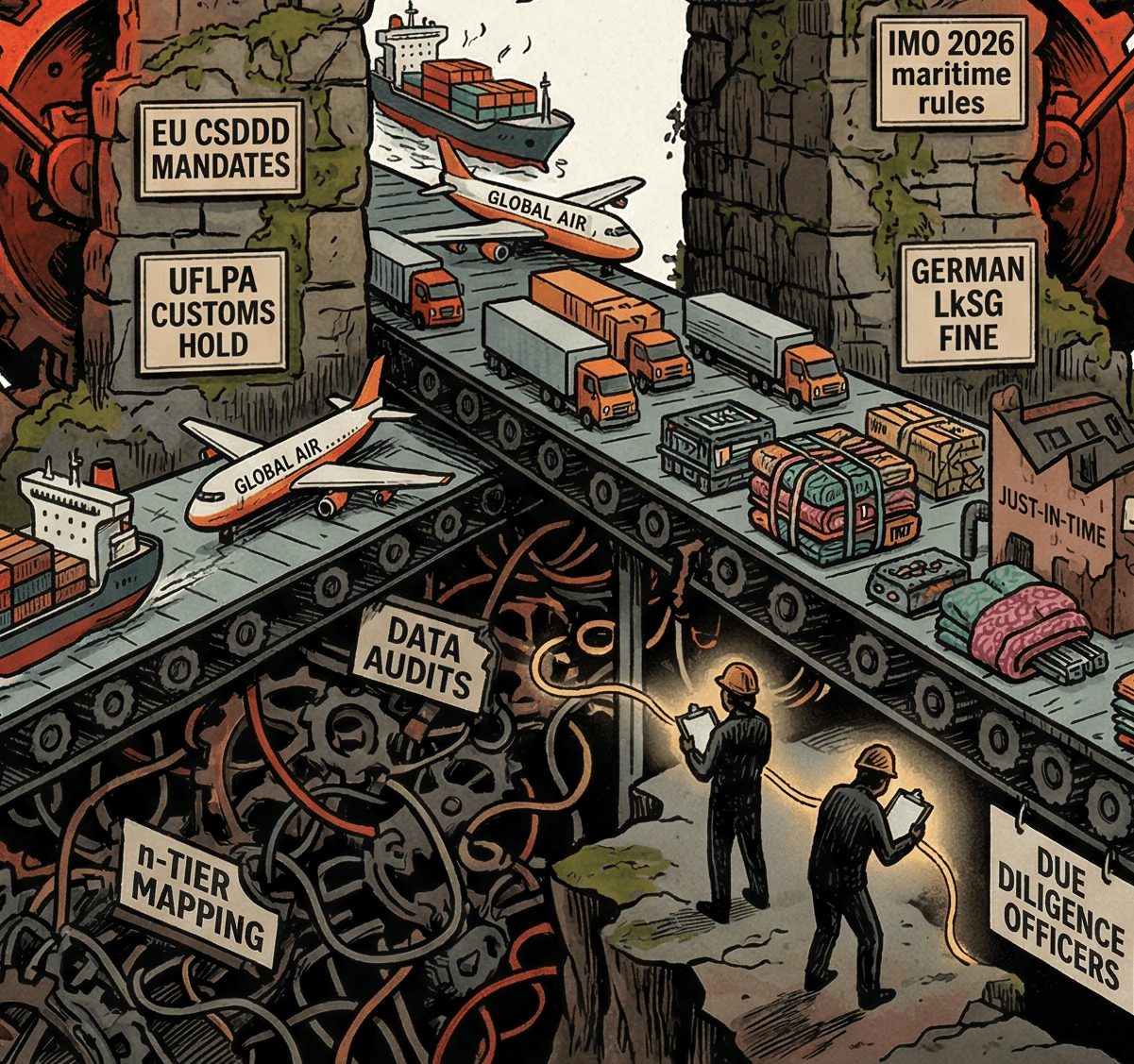
U.S. Customs and Border Protection (CBP) updated its Forced Labor Ban Enforcement Statistics Dashboard to identify commodities at the Harmonized Tariff Schedule 4-digit level (HTS-4). This allows CBP to target specific sub-components (like "Cotton Dresses" vs. "Cotton T-shirts") with surgical precision. For importers, this necessitates an even deeper n-tier supply chain map because a single non-compliant sub-component can now flag an entire customs entry more easily.
Source: U.S. Customs and Border Protection
EU Digital Product Passport (DPP) Central Registry Timeline Finalized
The EU has confirmed that the Central Registry of Product Identifiers is slated for launch in June 2026. This registry will serve as the single source of truth for all product-level data, including material composition, origin, and recyclability. For a product to be sold in the EU, it must eventually be registered here.
Source: EU ESPR Technical Roadmap / ESG Today
Implementation Phase Begins for Simplified CSDDD/CSRD Omnibus, Germany Repeals LkSG reporting standards
With the Omnibus I package now in the implementation phase, the EU has narrowed the n-tier mapping requirement to high-risk sectors and obscure suppliers. Under the revised Article 8(2a), companies may rely on reasonably available information unless the supplier is in a high-risk sector such as Apparel from Asia, Minerals from Africa and Wood products from South America. Supply chains transparency must be provided by any company with 5,000 or more employees and for any smaller company with a supply chain that is not publicly available.
The German government has officially initiated the repeal of the specific LkSG reporting standards to favor the Omnibus EU model, signaling a temporary reduction in administrative burden for mid-sized firms.
Source: Noerr - CSDDD Amending Directive Published in the Official Journal