The Sole-Sourcing Trap: What the Nestlé Formula Recall Teaches Us About Hidden n-Tier Supply Chain Risks
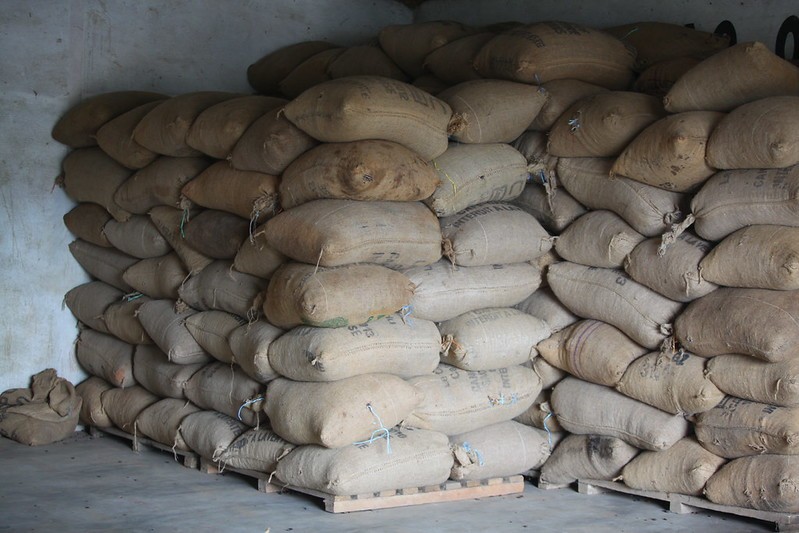
The recent global recall of Nestlé infant formula has sent shockwaves through the consumer goods industry. While the immediate focus should be consumer safety and brand recovery, there is a much deeper structural lesson to be learned from this crisis.
Many global enterprises operate under the illusion of diversified sourcing: because they have a roster of Tier 1 suppliers, their supply chain risk is distributed. The Nestlé formula recall shows the opposite: many of the world’s most sophisticated companies are unknowingly tethered to a single point of failure deep within their sub-tier suppliers.
When a critical raw material—upstream, invisible, and essential—is sourced from a single supplier, a company isn't just taking a risk. It’s gambling the entire brand on an unknown company, likely thousands of miles away and operating under a totally different set of standards.
The Illusion of Diversity
The core of the problem is a lack of supply chain traceability. A company like Nestlé may purchase ingredients from a dozen different intermediaries, but if those twelve intermediaries all rely on a single processing plant or a single farm cluster for a specific enzyme or base powder, the entire supply chain is at risk.
In the case of this recent recall, the failure didn't start at the factory gate; it started thousands of miles upstream. A critical ingredient called Arachidonic acid (ARA) oil was tainted by soil bacteria at a sub-standard supplier. By the time contamination was detected, the material had already moved through the complex web of global logistics, making the recall exponentially more damaging - causing child illnesses and deaths in three countries so far.
This is the Sole-Sourcing Trap: without end-to-end visibility, companies are blind to the fact that their entire production line is dependent on a single upstream node. When that node fails—due to contamination, geopolitical instability, or climate events—the entire house of cards collapses.
The Danger of Synthetic Data
In an attempt to solve this, some companies have turned to solutions that promise visibility through AI-generated supply chain data. These platforms use synthetic data—probabilistic models that make statistical guesses about where a company’s materials might be coming from based on publicly-available trade data.
But as the Nestlé crisis illustrates, probabilistic traceability isn't good enough.
Synthetic data provides a false sense of security: it creates a digital twin of a supply chain that looks pretty on a dashboard but lacks any data on specific ingredients or individual transactions, rendering it unusable in the face of a recall. Food contamination crises cannot be managed with probabilistic data. When consumer health and safety is on the line, only authentic supply chain data should be used.
Authentic Data: The Sourcemap Difference
Preventing a sole-sourcing nightmare requires more than an algorithm; it requires a direct line to upstream suppliers to quickly - or even proactively - trace contaminations and block the flow of adulterated ingredients.
Sourcemap was built on a simple philosophy: Traceability Should be Based on Authentic Supplier Data. Nobody should have to guess where critical ingredients come from. Sourcemap is the only supply chain mapping software that facilitates direct, verified communication across every tier of the supply chain—from the retail shelf back to the farm or mine.
By engaging suppliers directly and validating their data in real-time, Sourcemap uncovers the hidden dependencies that AI misses. We help companies identify those critical bottleneck suppliers five tiers deep so that procurement teams can ensure that standards are in place at every step of the supply chain.
A Turning Point for Global Supply Chains
The only way to ensure your supply chain is resilient is to know exactly who is in it. Not through a simulation, but through supplier-attested data, independently verified. Don't wait for a recall to find out you’ve been relying on a single sub-par suppliers two, three, ever four tiers away. Map your supply chain, verify your data, and take control of your n-Tier risk.
To learn how Sourcemap can help you uncover hidden risks in your upstream supply chain, request a demo today.