U.S. Targets 59 Countries and EU in New Tariff Proposal
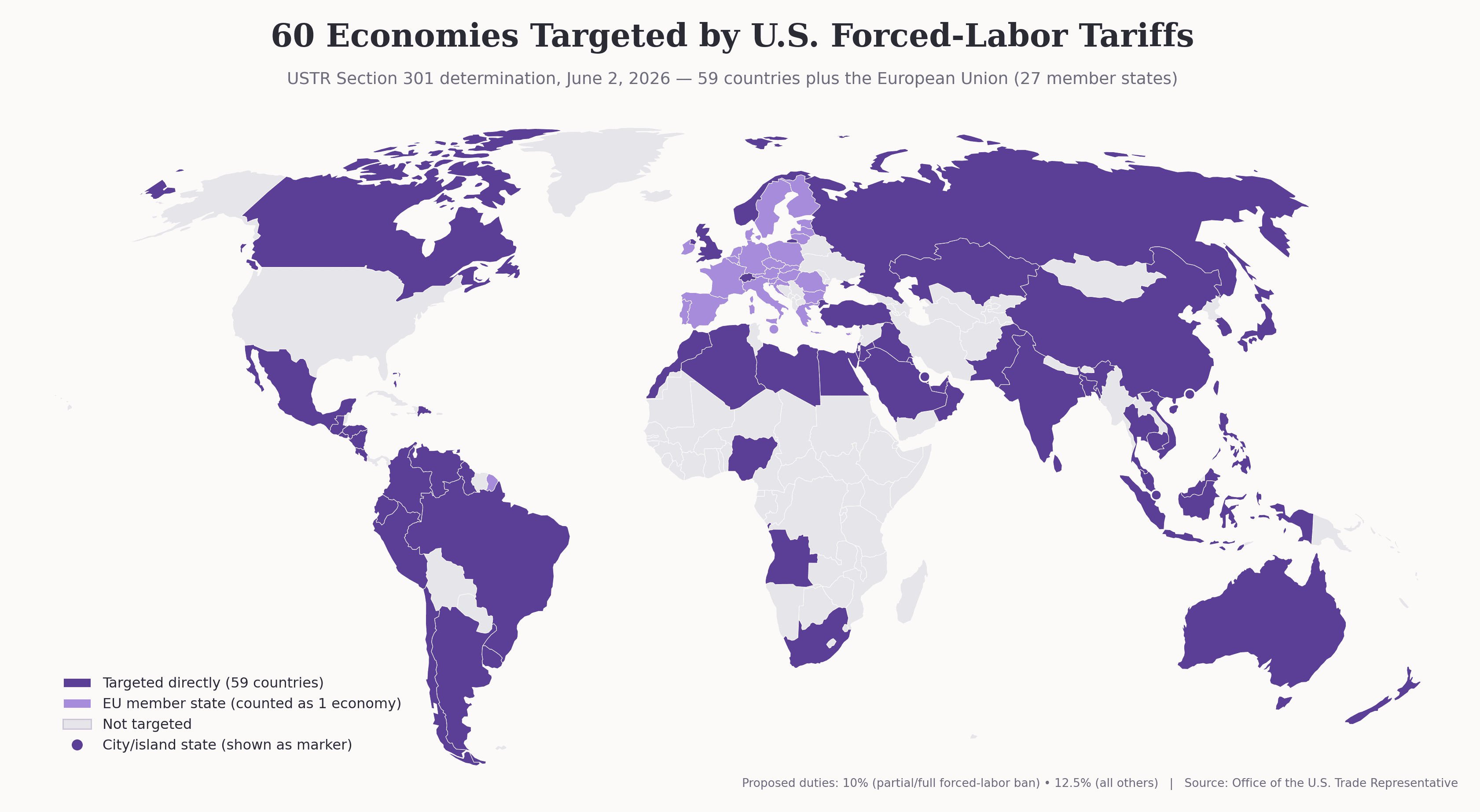
Trump administration officials announced that they plan to impose tariffs of up to 12.5% on 59 countries plus the European Union for failing to crack down on goods made with forced labor. Here's what you need to know.
After the U.S. Supreme Court struck down the administration's previous attempts at tariffs on imported goods, a new proposal was announced to impose tariffs of between 10 and 12.5% on imports for 60 American trade partners. The administration's justification for these Section 301 tariffs is the failure of these countries to enact or enforce bans on goods made with forced labor. The E.U., which would be included in these tariffs, has already passed an upcoming ban on goods made whole or in part with forced labor, which goes in to effect in December 2027. The EU Forced Labor Regulation is not, however, an import ban in the style of the U.S. forced labor ban.
The Supreme Court previously ruled that President Trump exceeded his authority by using the International Emergency Economic Powers Act, or IEEPA, to impose tariffs without congressional approval. The administration has since focused on both Section 122 and Section 301 tariffs to impose global duties on imports. (In May, a trade court ruled that the use of Section 122 of the Trade Act of 1974 to justify these tariffs violated the law).
In a report published in June 2nd by the U.S. Trade Representative, the countries + territories included are:
Canada
Ecuador
Indonesia
Mexico
Pakistan
Algeria
Angola
Argentina
Australia
Bahamas
Bahrain
Bangladesh
Brazil
Cambodia
Chile
People's Republic of China
Colombia
Costa Rica
Dominican Republic
Egypt
El Salvador
Guatemala
Guyana
Honduras
Hong Kong
India
Iraq
Israel
Japan
Jordan
Kazakhstan
Kuwait
Libya
Malaysia
Morocco
New Zealand
Nicaragua
Nigeria
Norway
Oman
Peru
The Philippines
Qatar
Russia
Saudi Arabia
Singapore
South Africa
South Korea
Sri Lanka
Switzerland
Taiwan
Thailand
Trinidad and Tobago
Türkiye
United Arab Emirates
United Kingdom
Uruguay
Venezuela
Vietnam
the European Union
To learn more about how rule of origin tariffs impact your business, reach out to our team of policy experts today.